
Founder, Medaris Health
Santa Barbara, California
Our story
A prostate cancer diagnosis. A week with a catheter. Two young children. And a supplement I couldn’t find.
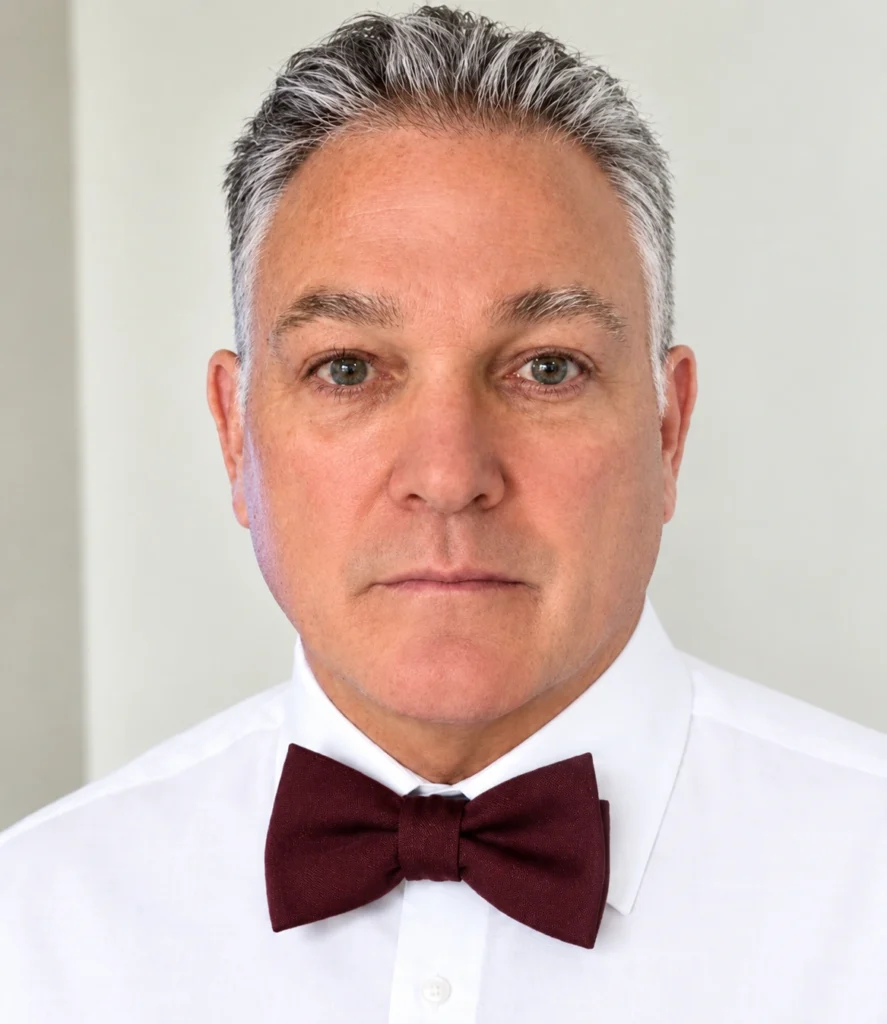
Kip Lytel, CFA
Founder, Medaris Health
Santa Barbara, California
Kip Lytel, CFA
Founder, Medaris Health
Santa Barbara, California
There’s no nanny in our house and no grandparents down the street. My wife is a trial lawyer, I run two finance firms, and between us we cover the school runs, homework, dinners and bedtimes for our two children, who are 8 and 10. We chose it that way. Being there for our kids is what matters most to us.
What we never planned for was one of us getting sick..
In 2026, I was diagnosed with prostate cancer. I was relatively young to be facing a diagnosis requiring treatment, and the risk classification meant that simply monitoring it wasn’t the approach my doctors recommended. After discussing my options, I chose HIFU, or high-intensity focused ultrasound, which uses focused ultrasound energy to heat and destroy targeted prostate tissue.
My doctors were excellent, and I’m grateful for the care I received. I was also fortunate that we had identified the cancer and could move forward with treatment.
The procedure went well, but the recovery was something I hadn’t fully appreciated beforehand.
I went home with a urinary catheter that stayed in place for a week. Until you’ve experienced it, it’s difficult to understand how much something like that disrupts everyday life. Getting dressed, sleeping, moving around the house and simply going about your day all become more complicated.
And when the catheter finally came out, recovery wasn’t over. I experienced a significant burning sensation and urinary discomfort as the treated prostate tissue healed. Something as routine as going to the bathroom became a constant reminder of what I had just been through.
Through it all, I kept thinking about my children. I wanted to be there for them—not just now, but for all the years ahead.
The more I researched prostate supplements, the more I questioned what was actually behind the products on the shelf.
Most followed a familiar formula: saw palmetto, pumpkin seed, stinging nettle, beta-sitosterol, lycopene and various combinations of vitamins and minerals. These ingredients have been studied, particularly for urinary symptoms associated with an enlarged prostate. But I wanted to understand something different: what was the actual human research showing about these ingredients in relation to prostate cancer?
The distinction matters. Evidence suggesting an ingredient may help urinary symptoms from an enlarged prostate doesn’t establish that it helps with prostate cancer. Much of the evidence behind these familiar combinations is limited, mixed or focused on a different issue altogether.
Then I came across research examining two compounds together: curcumin, the active compound in turmeric, and ursolic acid, found naturally in sources such as apple peel and rosemary.
This was different from simply finding another list of popular supplement ingredients. Researchers were investigating specific biological mechanisms and how these compounds might work together. A published review examined their potential in prostate cancer research, and a subsequent Phase I human study investigated their safety and bioavailability in a lipid-enhanced formulation.
It was early research, not proof of a cancer benefit. But it was a specific scientific direction that caught my attention, and I wanted to investigate it further.
I started looking for a product that reflected this research. I couldn’t find one.
I found products containing some of the same individual ingredients, including premium branded extracts. But I also found proprietary blends that grouped several compounds together without disclosing the individual amounts. Seeing an ingredient listed on a label wasn’t enough. I wanted to know exactly how much was included, how the formula compared with the research, and whether the ingredient purity was established.
I didn’t want another collection of ingredients assembled because they sounded impressive on a label. I wanted a formulation built around a specific body of published research, with disclosed amounts, clearly specified ingredients and independent quality testing.
I couldn’t find what I was looking for. So I decided to build it.
A prostate cancer diagnosis changes your perspective in a hurry. It certainly changed mine.
My advice is simple: pay attention to your health. Don’t put off screenings or appointments. Ask questions, understand your diagnosis and explore your treatment options with qualified medical professionals.
I also want men to be more discerning about supplements. Read the labels. Look at the actual ingredient amounts. Ask about purity and testing. Don’t confuse a compelling marketing claim with credible scientific evidence.
I’m not building Medaris Health to sell people a promise or suggest that supplements replace medical care. They don’t. Our products are dietary supplements, not cancer treatments, and are not intended to diagnose, treat, cure or prevent disease.
I’m building it because I believe people deserve better information, greater transparency and products developed with more discipline.
This started with something I needed for myself. I couldn’t find it, so I decided to build it.
That’s why I started Medaris Health.
— Kip Lytel, CFA
Launch news and research updates only. No spam; unsubscribe anytime.